
A leadership team sits around a conference table looking at a difficult problem. Within ten minutes the room has split. One camp wants to act, certain the situation is already clear enough. Another wants more analysis, suspicious that the obvious diagnosis is the wrong one. The argument appears to be about the problem. It is really about something else. The two camps do not share a picture of what success looks like, and so the same set of facts is reading differently to each of them. Without an agreed picture of where the organisation is trying to get to, every conversation about what to do drifts. This is the moment in which the value of having a genuine strategy becomes practical, rather than rhetorical.
Strategy is not the buzzword version of itself
A useful old formulation, drawn from military planning, treats strategy as the relationship between three things: the ends a team is trying to achieve, the ways it intends to get there, and the means it can commit. Ends define what success looks like. Ways describe the approaches leaders have chosen. Means cover money, people, time and attention. Held together, the three become a frame the team can reason inside. Without that frame, words like “priority” and “strategic” do not carry any weight; they become labels for whatever happens to feel important on the day.
The first practical benefit of clear ends is that everyday decisions become quicker. Two options sit on the table; the team checks which one moves it closer to what it is trying to achieve, and the conversation has somewhere to land. Where ends are vague, the same straightforward decision can be debated indefinitely, because there is no shared basis on which to prefer one option over another.
The harder benefit shows up in dilemmas, which are not the same as decisions. A decision is a choice between options that have real merit. A dilemma is a choice between options that all carry a cost, and the right answer is the least bad one. Without clear ends, dilemmas tend to paralyse a team, because every option looks like a loss and nothing makes one loss preferable to another. With clear ends, the team can see which costs threaten what matters most and which costs are tolerable. The right answer is rarely comfortable, but it becomes visible.
Problem scoping only works when there is something to scope against
Problem scoping is the discipline of working out what question the team is really answering. It separates the symptom you noticed from the cause that produced it. It distinguishes what you know from what you are assuming. It resists the comforting reflex of mapping a new situation onto a familiar template.
What problem scoping requires, to be done well, is a clear sense of what would count as a solution. That sense does not come from looking harder at the problem. It comes from the strategic frame the team operates in. With clear ends, a situation can be assessed honestly: does it threaten what we are trying to achieve, does it open a route towards it, or is it noise that looks loud today and will look small in a fortnight? Without clear ends, every problem looks equally urgent, because there is no basis for ranking them.
This is why problem scoping and strategy are not separate disciplines to be trained in turn. Problem scoping nests inside strategy. A team gets better at scoping when the strategic context above it is real.
Where decision making scenarios come in
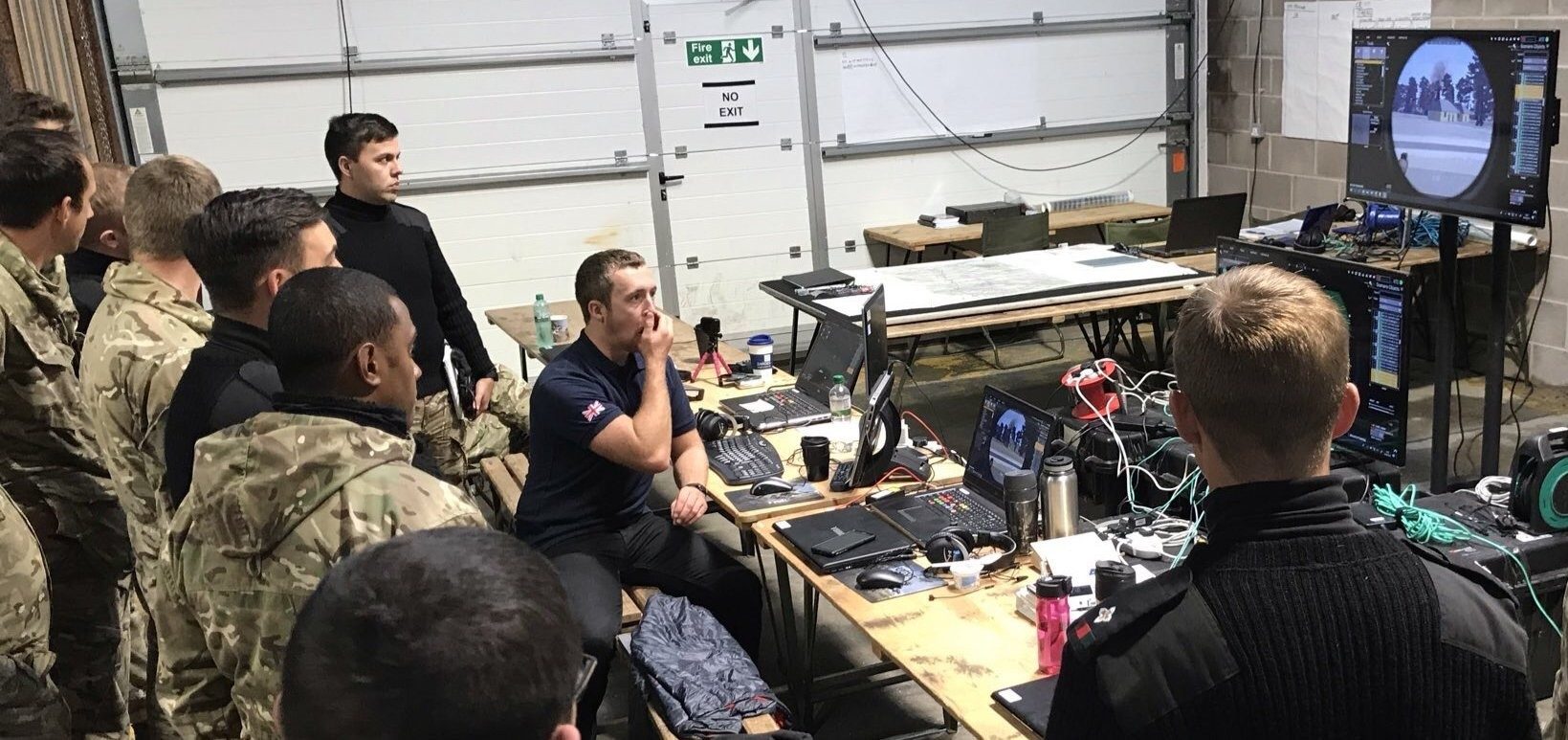
A decision making scenario gives a team a structured situation with incomplete information, competing pressures, and a clock that does not stop. The format can be a tabletop exercise, a scenario based game, or a more immersive simulation depending on the stretch required. What matters is that the situation is realistic enough to engage the team seriously and bounded enough that the debrief produces insight they can act on.
The design choice that changes everything is whether the exercise is run inside a stated strategic frame. A scenario presented in a vacuum produces a puzzle to be solved. A scenario presented inside the team’s own ends, ways and means becomes a place where problem scoping happens in context. The facilitator can ask the questions that, under real-world pressure, the team would rush past: does this development threaten one of our ends, and if so which one? Which of our ways is most exposed by it? Are our means committed where they should be, or have they drifted into something less important? The team starts to read the situation through the strategic lens, because the lens is on the table in front of them.
The habit forms through repetition
The first scenario is hard work. The team has to keep reminding itself what its ends actually are, and force itself to choose between concerns that all look legitimate. By the third or fourth scenario, the reminders thin out. By the time a leadership team has run several decision making scenarios inside its real strategic frame, the frame has become the default lens rather than an exercise to remember.
That is the deeper benefit, and the reason strategic training and strategy training are best delivered through scenarios rather than through slides. The transfer of a framework is the easy part. The harder part is building the habit of using it, and habits are built by repetition under realistic load. Scenario based games and tabletop exercises provide that load in conditions where mistakes cost nothing, so the team can make them, see them, and do better next time.
What this looks like in practice
The strongest exercises are built around the strategic frame the team actually operates in. The decisions in the scenario are the kind of decisions the leaders will have to make for real. The dilemmas are the dilemmas they will face. Done this way, a tabletop exercise, a scenario based game or a leadership games session is not entertainment with a debrief tacked on the end. It is the place where problem scoping, decision-making and strategic habit are developed together, in the relationship they will need to hold in the real version.
This is the form of small business team building that produces lasting capability rather than enthusiasm in the room.
Return to the leadership team at the start of this article. The two camps were not really arguing about the problem; they were arguing about which picture of success to scope it against. A team that has done this work several times together does not have that argument any more. They reach for their ends first, scope the problem against them, and have the trade-off conversation that the situation actually requires. That is the capability decision making scenarios, run inside a real strategic frame, develop.
Why Evocatus
Evocatus Consulting designs and delivers decision making scenarios, tabletop exercises and scenario based games for leadership teams that need to perform under pressure. We work with you to identify your ends, the dilemmas your team will face inside them, and the conditions under which the exercise needs to land. The output is a team that scopes problems sharply, decides well under pressure, and develops the strategic thinking habits that hold up when the room gets loud.
If you would like to discuss what bespoke strategic training could do for your team, get in touch at evocatus.co.uk.