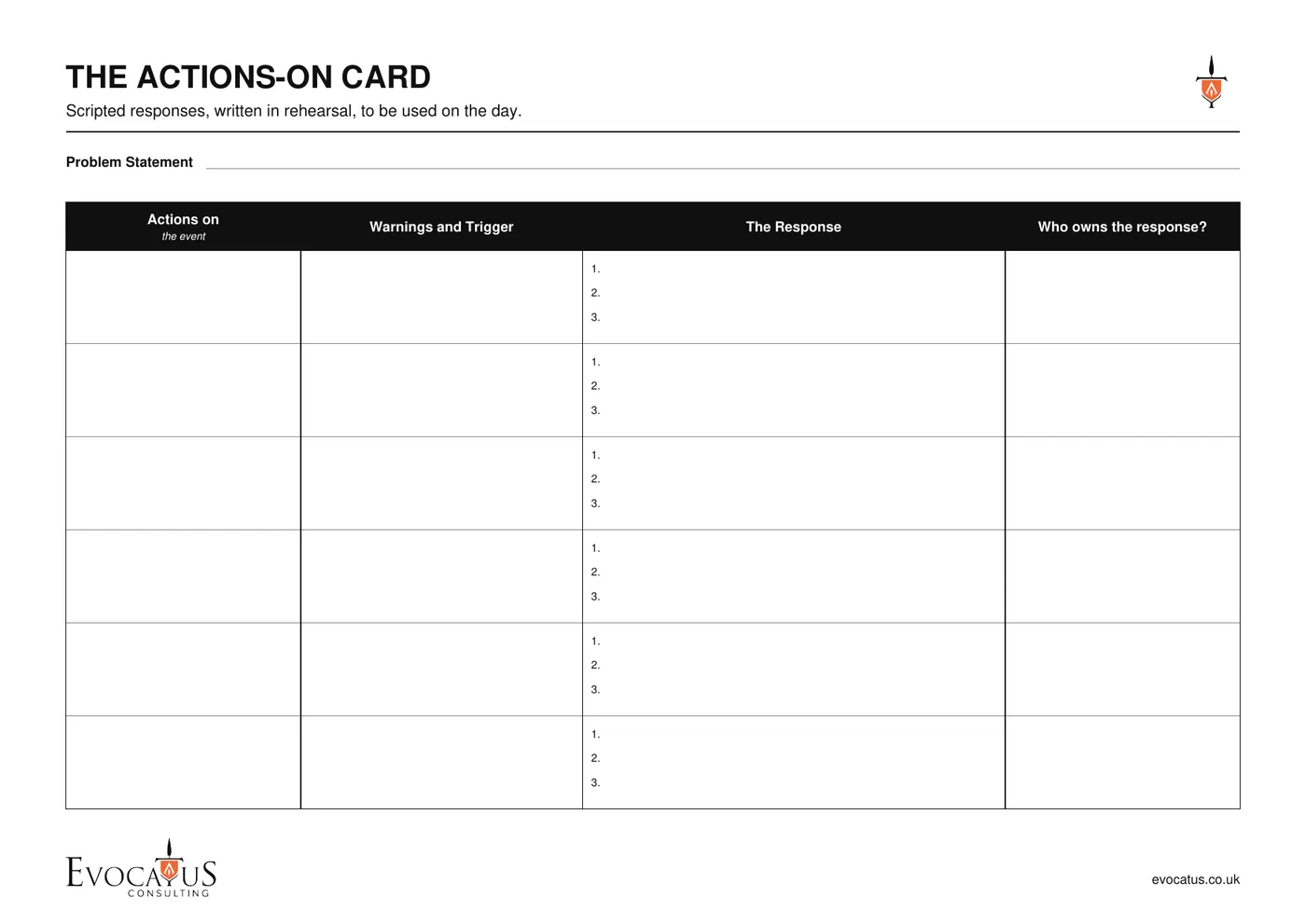
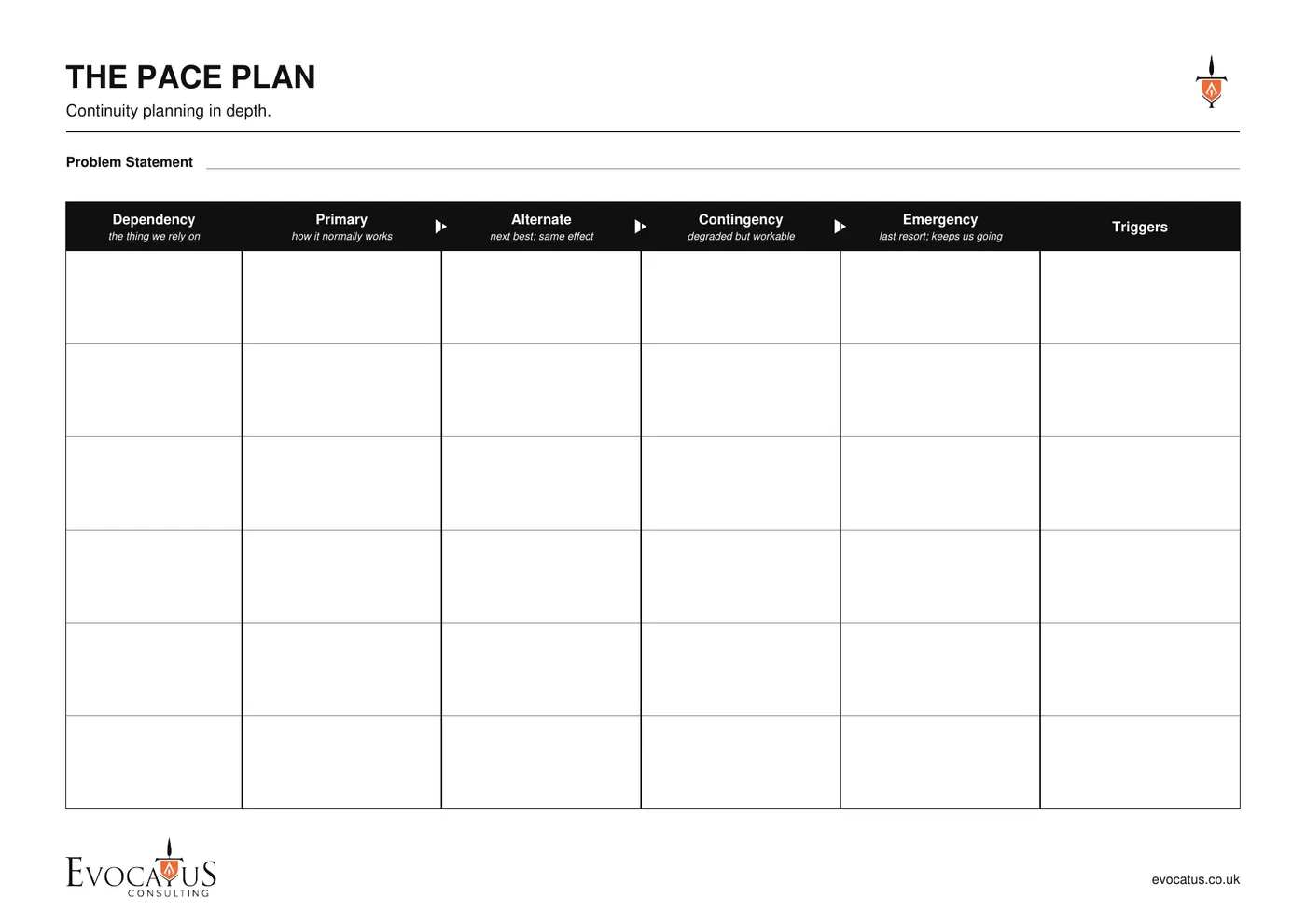
Two tools to use during the execution of any resilient plan. The PACE Plan collects fallback options for each critical function. The Actions-On Card lists pre-identified events that could happen and a predetermined response to each. Use PACE to maintain critical resilience; use the Actions-On Card when you want your crisis response to run like clockwork.
The PACE Plan is about continuity: for each thing you cannot do without, it sets out three fallback ways of keeping going, from normal running to last resort, and the triggers for moving from one to the next. The Actions-On Card is about response: for each event you can foresee, it records the warning signs, the first actions and who owns them.
A plan written on either sheet is untested until the team has walked through it. Our guide to contingency planning covers how to do that with a tabletop exercise.
The PACE Plan
Why would I use The PACE Plan?
Use it when something critical depends on a single system, supplier, person or route, and you need to know what you would do if it failed. The PACE Plan sets out three additional ways of keeping that function going, from the primary option to the emergency one, and the triggers for moving from one to the next.
How to use it. List your critical dependencies first, one per row: the payroll system, the warehouse, the one engineer who understands the old server. For each, write how it normally works, then work down the options. Make each level as independent as you can of the one above it, so that whatever takes out the primary does not also take out the alternate. Then the triggers: the condition you could observe that tells you to move down a level, and who makes that call. Test each row by asking how long you could keep going on the emergency option.
PACE comes from military communications planning, where every unit needs a primary, alternate, contingency and emergency means of staying in contact. The same approach works for any function an organisation cannot do without.
Download The PACE Plan (A4 landscape PDF)
The sheet arrives by email. The button in that email confirms your address and opens the PDF. You will also receive our newsletter, once a month, from which you can unsubscribe at any time if you don't find it useful.
The Actions-On Card
Why would I use The Actions-On Card?
Use it when you can name the events most likely to disrupt you and want the first response decided and planned before any of them happens. The card gives each event a row: the warnings and trigger, the response, and who owns it. On the day, the team follows a response it wrote and rehearsed in calmer conditions.
How to use it. Start with the events you can foresee: a key supplier fails, the site is closed, data is stolen, a senior leader is unavailable. Your risk register and The Premortem are good sources. For each event, write the warning signs and the trigger, then the response as a short numbered list of first actions, written plainly enough to follow under stress. Give each row one owner. Keep the card to a single page, and review it after every exercise or real incident.
“Actions on” is the military term for a drill agreed and rehearsed in advance for a predictable event, such as actions on contact, actions on lost, actions on casualty. The card applies the same idea to the predictable disruptions an organisation can foresee.
Download The Actions-On Card (A4 landscape PDF)
The sheet arrives by email. The button in that email confirms your address and opens the PDF. You will also receive our newsletter, once a month, from which you can unsubscribe at any time if you don't find it useful.